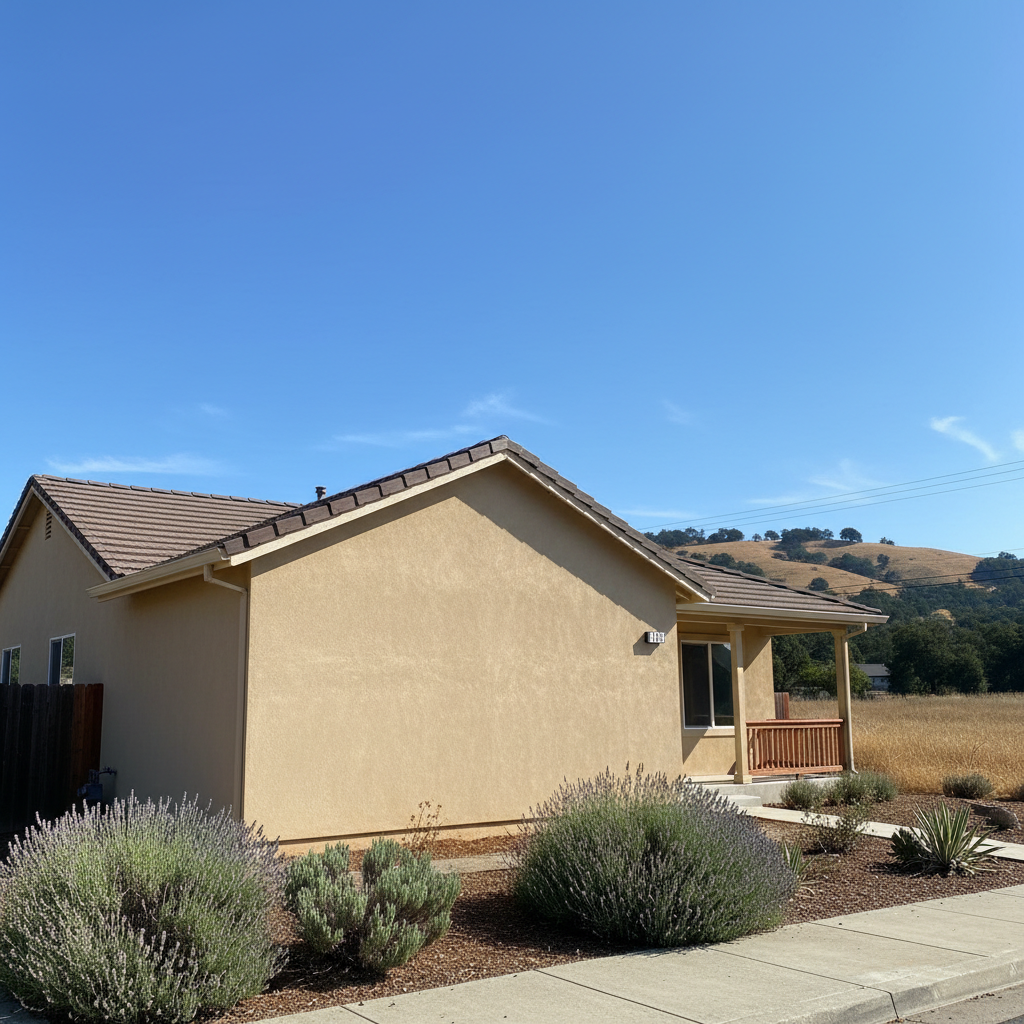
So, you're thinking about EIFS for your place here in Santa Rosa. Maybe you've heard it's fantastic for insulation, or you just like how it looks. Whatever your reason, the big question always boils down to cost, right? And let me tell you, there's a ton of bad info floating around out there. After years of doing this with Santa Rosa Stucco & Plastering, I've seen pretty much everything. I'm not going to give you some vague "it depends" answer. Instead, we'll talk real numbers and what truly makes up that final price tag.
What Really Drives EIFS Installation Costs?
A few major things can really push the price up or down when we're talking EIFS. It's not just the square footage, though that's obviously a huge part of it. Think of it this way:
- The EIFS System Type: You've got different classes of EIFS, you know? Class PB (polymer-based) is the most common residential system we see around here. It uses a thin base coat, mesh, and then a finish coat. Class PM (polymer-modified) is thicker, honestly more like traditional stucco in how it's applied, but it's still an EIFS system. PM materials generally cost more, and it takes more work to put on. Most folks in Santa Rosa usually go with PB unless there's a specific reason for PM, like a commercial building that needs extra impact resistance.
- Project Complexity & Design: Is your building a plain box, or does it have a lot of fancy architectural details? Arches, columns, intricate trim, multiple bump-outs – all these things add to both labor and material costs. Every corner, every window, every door opening needs careful detailing and flashing. More cuts and custom work mean more time, and that translates to more money.
- Condition of the Existing Surface: What are we actually putting the EIFS over? If it's a perfectly flat, clean sheathing, that's one thing. But if we're dealing with old, uneven siding that needs to come off, or a surface that needs a lot of prep work or repairs, well, that's going to add to the bill. We can't just slap EIFS over something weak; it absolutely has to be solid.
- Insulation Thickness: One of the best things about EIFS is how well it insulates. The thicker the insulation board (usually EPS foam), the better the R-value you get, but yes, the material cost goes up too. Standard thickness is often 1-2 inches, but some projects might need more.
- Accessibility: Can we easily get to all parts of the building? If we need a lot of scaffolding, lifts, or special safety gear because of height or tricky landscaping, that's an extra cost. A single-story ranch home is way easier than, say, a multi-story commercial building downtown.
Typical Cost Ranges in Santa Rosa
Alright, let's get down to some actual numbers. Keep in mind, these are averages for our area, and every job is truly unique. Still, this should give you a good ballpark idea.
For a standard Class PB EIFS system on a house with average complexity, you're generally looking at about $10 to $18 per square foot. This price covers both materials and labor for a complete system.
- Lower End ($10-$12/sq ft): Think simple, flat walls, easy access, not many architectural details, standard 1-inch insulation. Maybe a small addition or a very straightforward commercial facade.
- Mid-Range ($13-$15/sq ft): This is where most residential projects land. Average complexity, a few windows, maybe some modest trim, 1.5-2 inches of insulation.
- Higher End ($16-$18+/sq ft): More complex designs, lots of corners, arches, intricate detailing, thicker insulation, tough access that needs significant scaffolding, or if you're choosing a premium finish or a Class PM system. Commercial projects often lean towards the higher end, partly due to stricter rules and sometimes needing more robust systems.
So, for a 1,500 square foot wall area (not floor area, just to be clear), you could be looking at anywhere from $15,000 to $27,000. It's a big investment, sure, but you're getting a really durable, energy-efficient exterior.
What Should a Quote Include?
When you get a quote from a good contractor like us, it shouldn't just be one single number. You need to see the breakdown. Here's what we usually put in ours:
- Preparation: This covers cleaning the surface, any necessary repairs, flashing around openings, and putting in drainage components if it's a drainage EIFS system (which, honestly, I highly recommend, especially with our rainy winters here in Sonoma County).
- Materials: A detailed list of all the EIFS parts – adhesive, insulation board (EPS), base coat, fiberglass mesh, primer, and the finish coat (including the color and texture you picked).
- Labor: The cost for the crew to install everything correctly. This is where having experienced people really pays off.
- Scaffolding/Access: If special equipment is needed, we'll list it out.
- Waste Removal: Getting rid of old materials and EIFS scraps.
- Warranty Information: Both for the materials from the manufacturer and for our workmanship as the contractor.
Make sure you understand every single line item. If something's unclear, just ask. Any good contractor will be happy to explain it.
How to Avoid Overpaying for EIFS
Nobody wants to get ripped off, especially on a big project like this. Here's my best advice:
- Get Multiple Bids: Don't just go with the first person who shows up. Get at least three detailed quotes. This helps you compare apples to apples and understand what the going rate is. But don't just pick the cheapest one; compare what's actually included.
- Check References & Licenses: This is huge, truly. Make sure the contractor is licensed and insured. Ask for references and actually call them. Look at their past work. You wouldn't hire an unlicensed electrician, so don't do it for your home's exterior.
- Understand the System: Ask what type of EIFS system they're suggesting and why. A drainage EIFS is almost always the smarter choice in our climate, even if it costs a little more upfront. It really helps prevent moisture problems down the line.
- Read the Contract Carefully: Make sure everything you discussed is in writing – materials, colors, textures, timeline, payment schedule, and warranty. No surprises, right?
- Don't Be Afraid to Ask Questions: If a contractor gets annoyed by your questions, that's a big red flag. You're making a significant investment; you have every right to understand what you're paying for.
EIFS is a fantastic system when it's installed correctly. It offers great curb appeal and can save you a lot on energy bills. Just do your homework, find a reputable local company like Santa Rosa Stucco & Plastering, and you'll be happy with the results for years to come.